
Heavy-Duty Towing After Accidents: What Drivers and Fleet Operators Need to Know
Accidents involving large vehicles are never simple. When commercial trucks, buses, RVs, or other heavy vehicles are involved in collisions, the aftermath requires specialized response, equipment, and coordination. Heavy-duty towing after an accident is not just about moving a vehicle off the road; it is about restoring safety, minimizing damage, and reopening roadways efficiently.
In Lancaster County and throughout Central Pennsylvania, Patriot Towing provides professional heavy-duty accident recovery services for commercial drivers, fleets, and large vehicle owners. Understanding how heavy-duty towing works after an accident can help drivers and businesses make informed decisions during stressful situations.
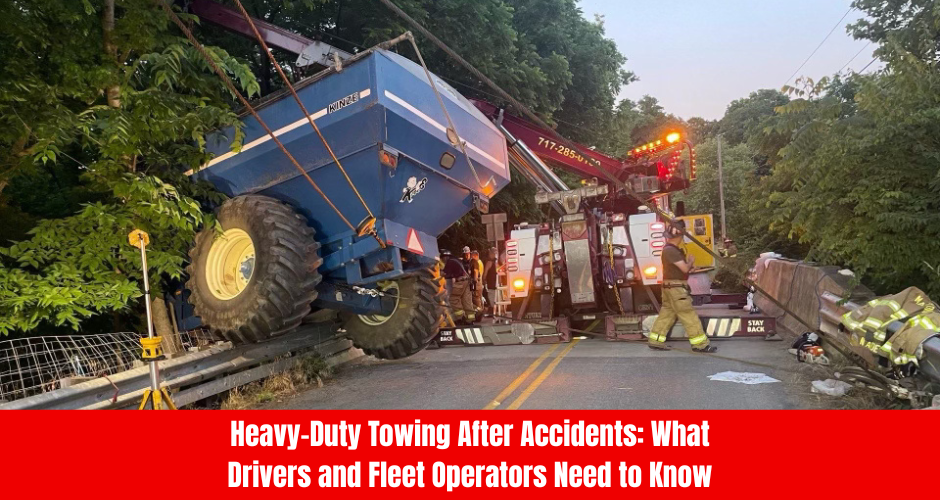
Why Heavy-Duty Accident Recovery Is Different From Standard Towing
Standard towing is designed for passenger vehicles and light trucks. Heavy-duty accident recovery involves a completely different level of complexity due to the size, weight, and configuration of large vehicles.
Key differences include:
Significantly higher vehicle weight
Shifting cargo or loads
Multiple points of failure or damage
Increased risk to surrounding traffic
Greater potential for roadway damage
Because of this, heavy-duty accident recovery requires specialized equipment, trained operators, and detailed planning.
Types of Vehicles That Require Heavy-Duty Accident Towing
Heavy-duty towing after an accident is commonly required for:
Tractor-trailers and semi-trucks
Dump trucks and work trucks
Box trucks and delivery vehicles
RVs and motorhomes
Buses and shuttle vehicles
Construction and municipal vehicles
Each type of vehicle presents unique recovery challenges depending on size, load distribution, and damage.
Common Accident Scenarios Requiring Heavy-Duty Towing
Heavy-duty towing is often needed following:
Jackknifed Tractor-Trailers
When a trailer folds toward the cab, specialized recovery techniques are required to avoid further damage.
Rollover Accidents
Large vehicles that roll onto their side or roof must be carefully uprighted using controlled rigging and lifting systems.
Multi-Vehicle Accidents
Commercial vehicles involved in multi-car accidents require coordinated recovery efforts to protect surrounding vehicles and infrastructure.
Off-Road or Embankment Accidents
Vehicles that leave the roadway may require winching, crane-style recovery, or staged recovery operations.
The Heavy-Duty Accident Recovery Process
Professional heavy-duty towing follows a structured process designed to maximize safety and efficiency.
Scene Assessment
Operators evaluate the vehicle position, damage, load condition, and surrounding environment before any recovery begins.
Traffic and Safety Coordination
Accident recoveries often require coordination with law enforcement, fire departments, and highway agencies to manage traffic flow and ensure scene safety.
Load Stabilization
Cargo or equipment loads must be stabilized or offloaded to prevent shifts during recovery.
Controlled Recovery and Uprighting
Using heavy-duty wreckers, rotators, and rigging systems, vehicles are carefully uprighted or repositioned.
Safe Transport
Once recovered, the vehicle is transported to a repair facility, storage yard, or designated location.
Why Improper Accident Recovery Can Be Dangerous
Improper heavy-duty towing after accidents can lead to:
Additional vehicle damage
Cargo loss or spills
Roadway damage
Extended traffic closures
Increased liability
Professional recovery ensures these risks are minimized.
Working With Law Enforcement and Emergency Services
Heavy-duty accident towing is often a team effort. Professional towing companies work alongside:
Local police departments
State troopers
Fire and rescue units
Highway and road maintenance crews
Clear communication and experience are essential to maintaining safety and efficiency on scene.
Protecting Vehicles, Cargo, and Equipment
Commercial vehicles and cargo represent significant financial investments. Professional heavy-duty towing focuses on minimizing secondary damage and preserving vehicle integrity whenever possible.
This is especially important for fleet operators who may need to document damage for insurance purposes.
The Importance of Choosing a Local Heavy-Duty Towing Provider
Local experience matters. Lancaster County presents unique recovery challenges including rural roads, narrow shoulders, agricultural traffic, and weight-restricted bridges.
A local heavy-duty towing provider understands these conditions and responds accordingly.
Why Drivers and Fleets Trust Patriot Towing
Patriot Towing provides heavy-duty accident recovery services backed by:
Trained and experienced operators
Modern heavy-duty wreckers and recovery equipment
Fast response times
Local Lancaster County expertise
Professional coordination with authorities
Heavy-duty towing after an accident is a critical service that impacts safety, traffic flow, and vehicle recovery. Choosing an experienced heavy-duty towing provider ensures the situation is handled properly from start to finish.
For heavy-duty accident towing in Lancaster, PA, Patriot Towing delivers reliable, professional recovery when it matters most.
Contact Patriot Towing for Heavy Equipment Transport
If you need heavy equipment transportation in Lancaster, PA, Patriot Towing is ready to help. Whether you are moving a single machine or coordinating multiple transports, our team can create a solution that fits your needs.
Contact Patriot Towing today to request a quote or discuss your heavy equipment hauling requirements.
Comments